
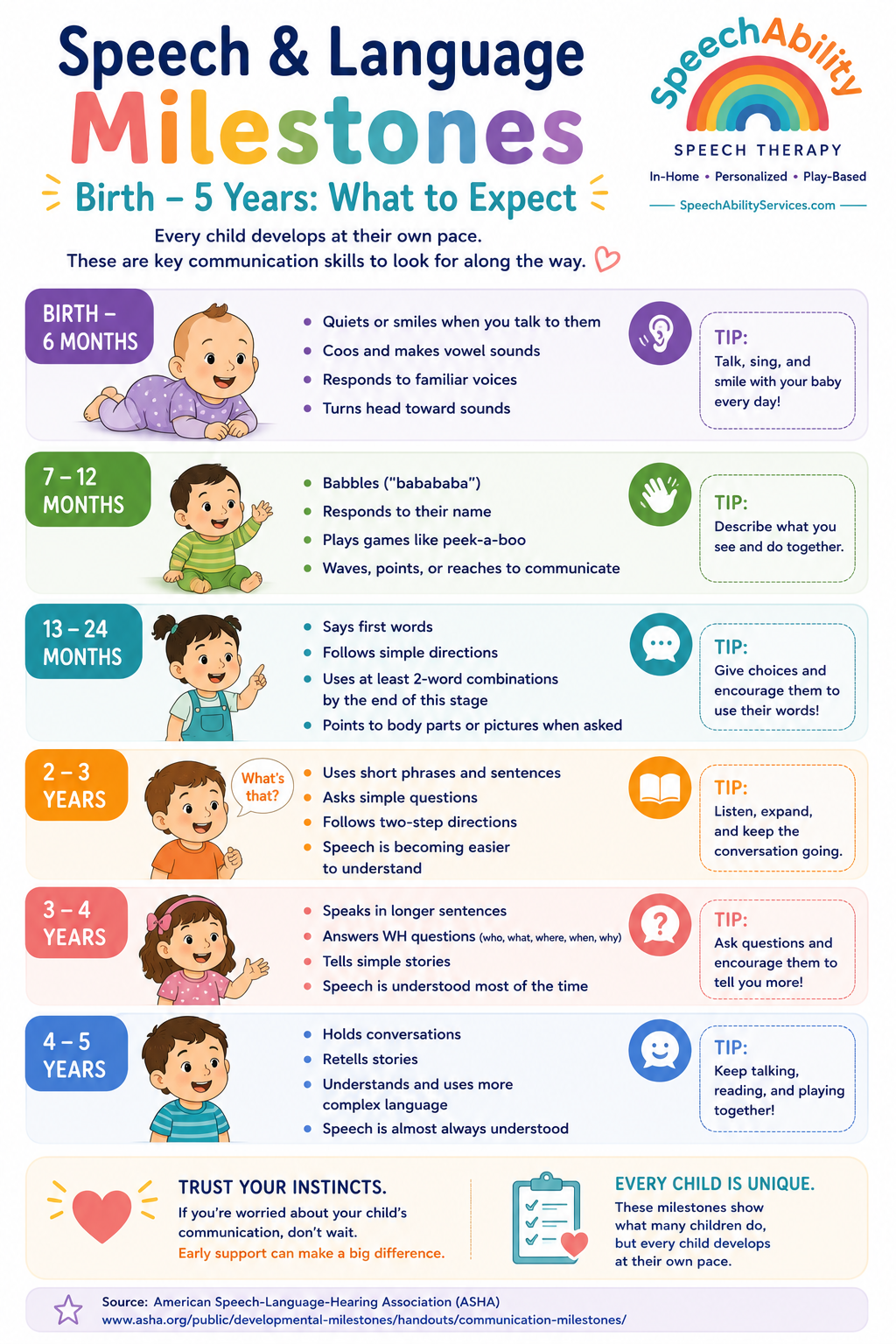
Wondering if your child's communication skills are on track? This quick reference highlights common speech and language milestones by age to help you understand what to expect and when it may be time to seek professional guidance.
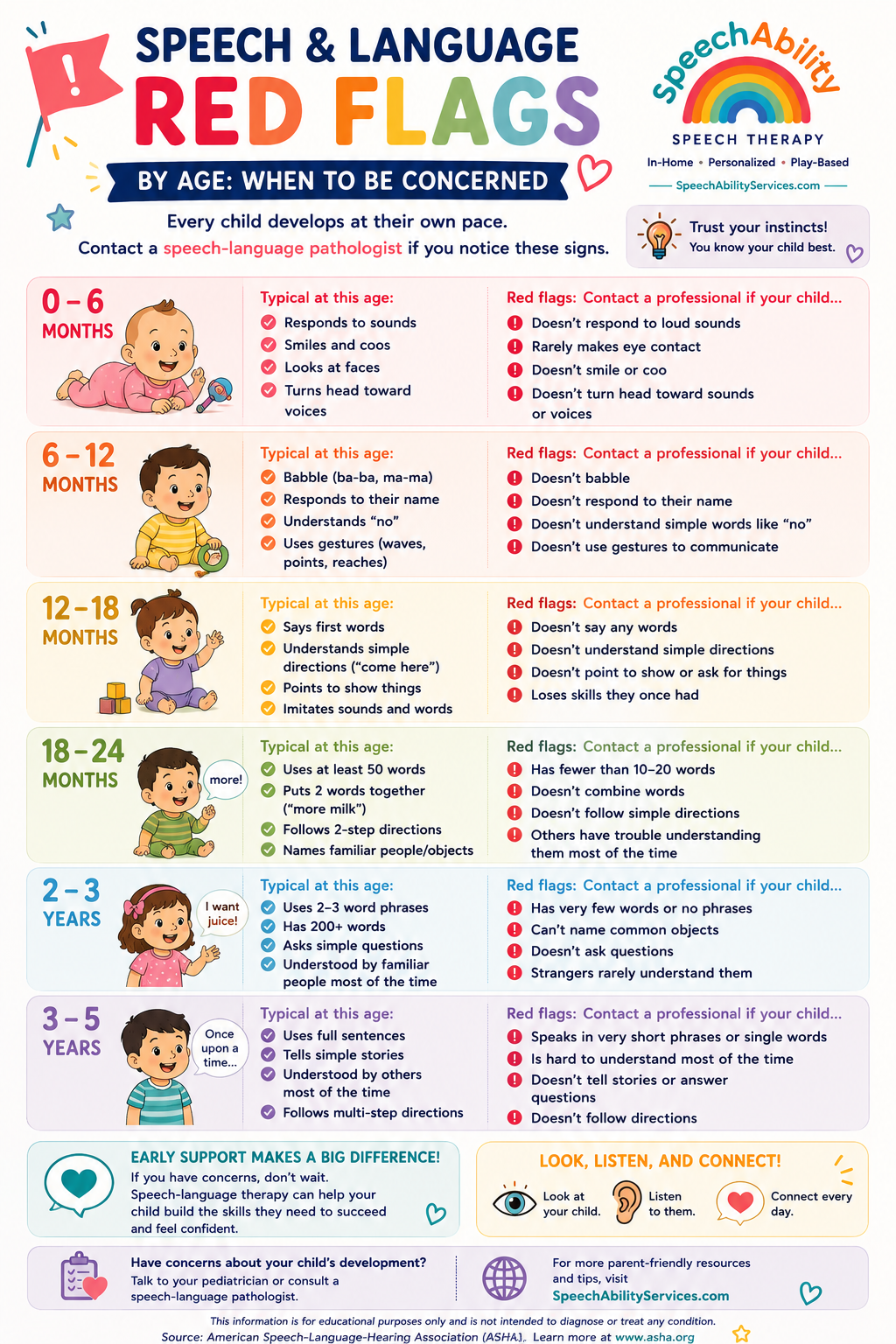
Wondering if your child's communication is developing as expected? This quick reference highlights common speech and language red flags by age to help you know when it may be time to seek a professional evaluation.
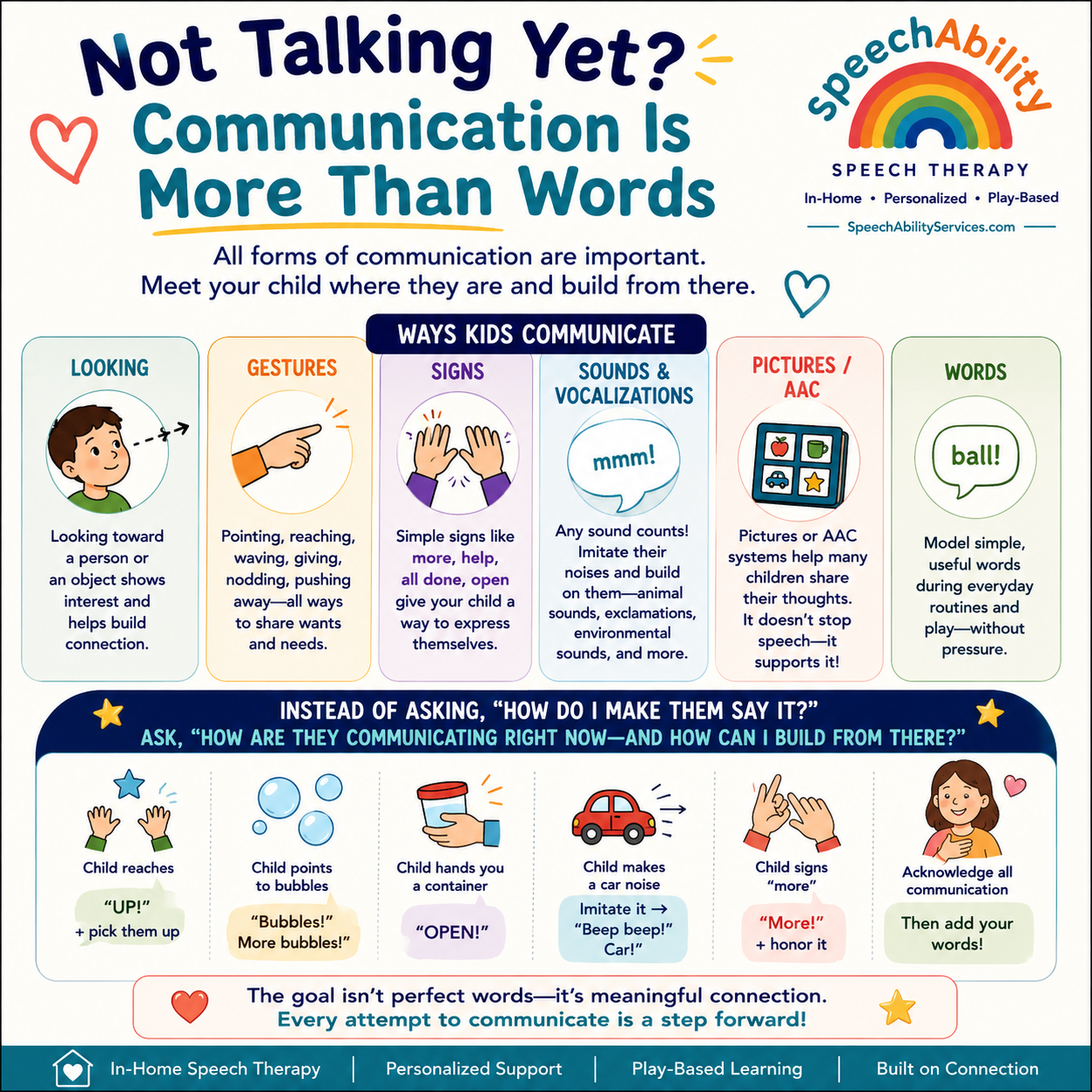
Communication Is More Than Words 💬 Children communicate in many ways before—and alongside—spoken words. Gestures, signs, sounds, pictures, AAC, and words all provide opportunities to connect and build language. Start with how your child is communicating right now, then model the next step naturally through everyday interactions.
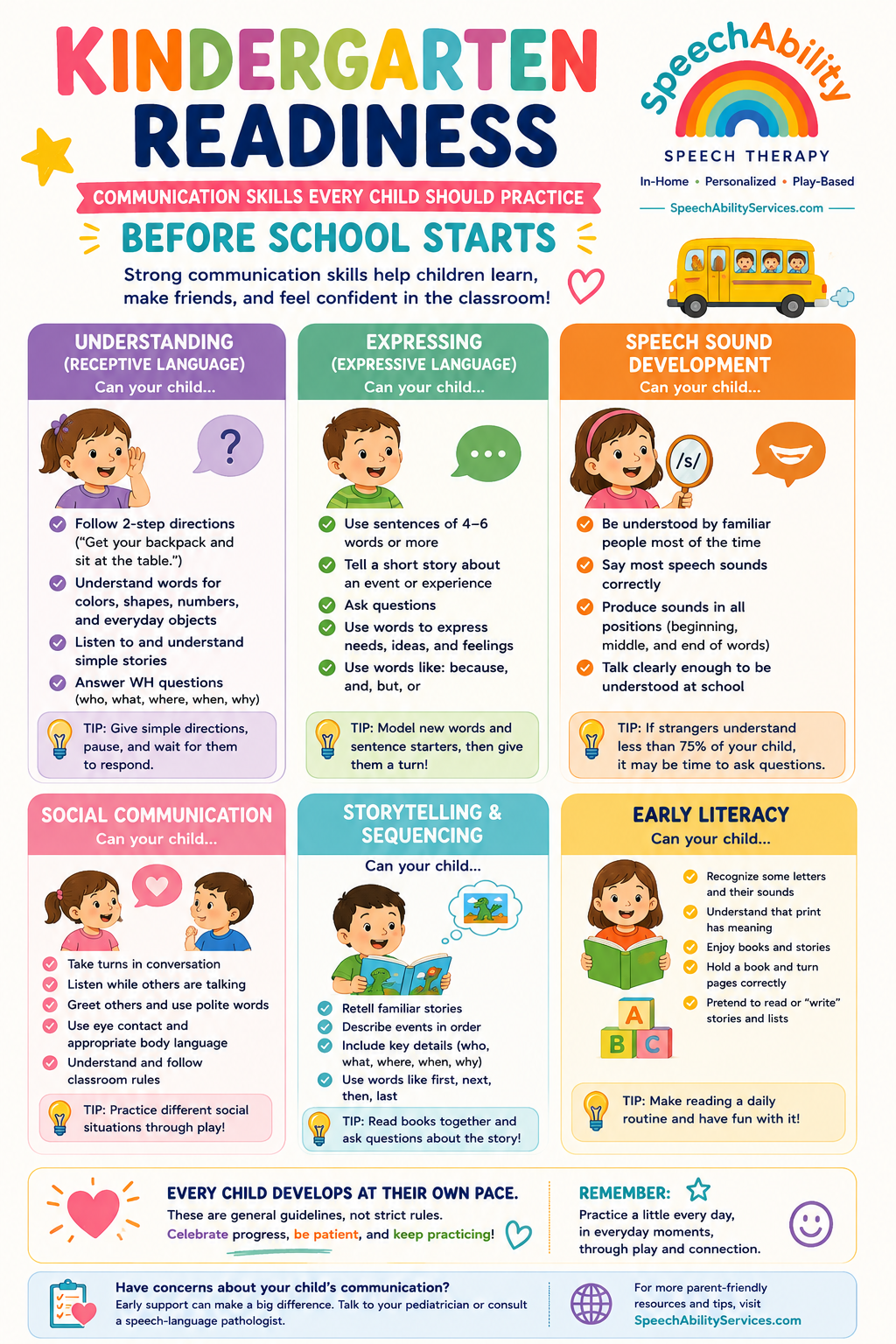
Starting kindergarten is about more than knowing letters and numbers. Explore the communication, social, and listening skills that help children feel confident and prepared for success in the classroom.
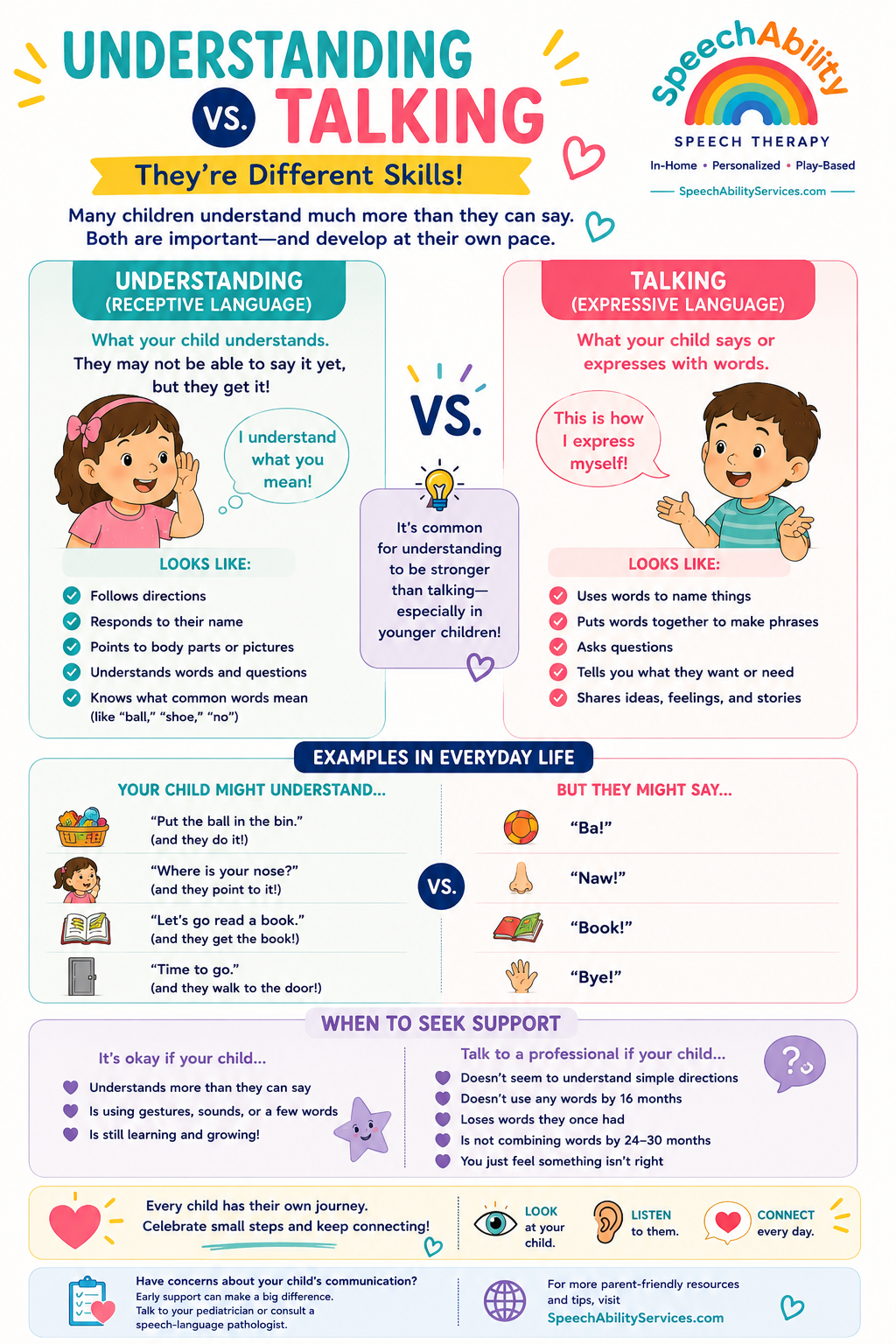
Does your child understand everything but say very little? Learn the difference between receptive (understanding) and expressive (talking) language and why both are important for communication development.
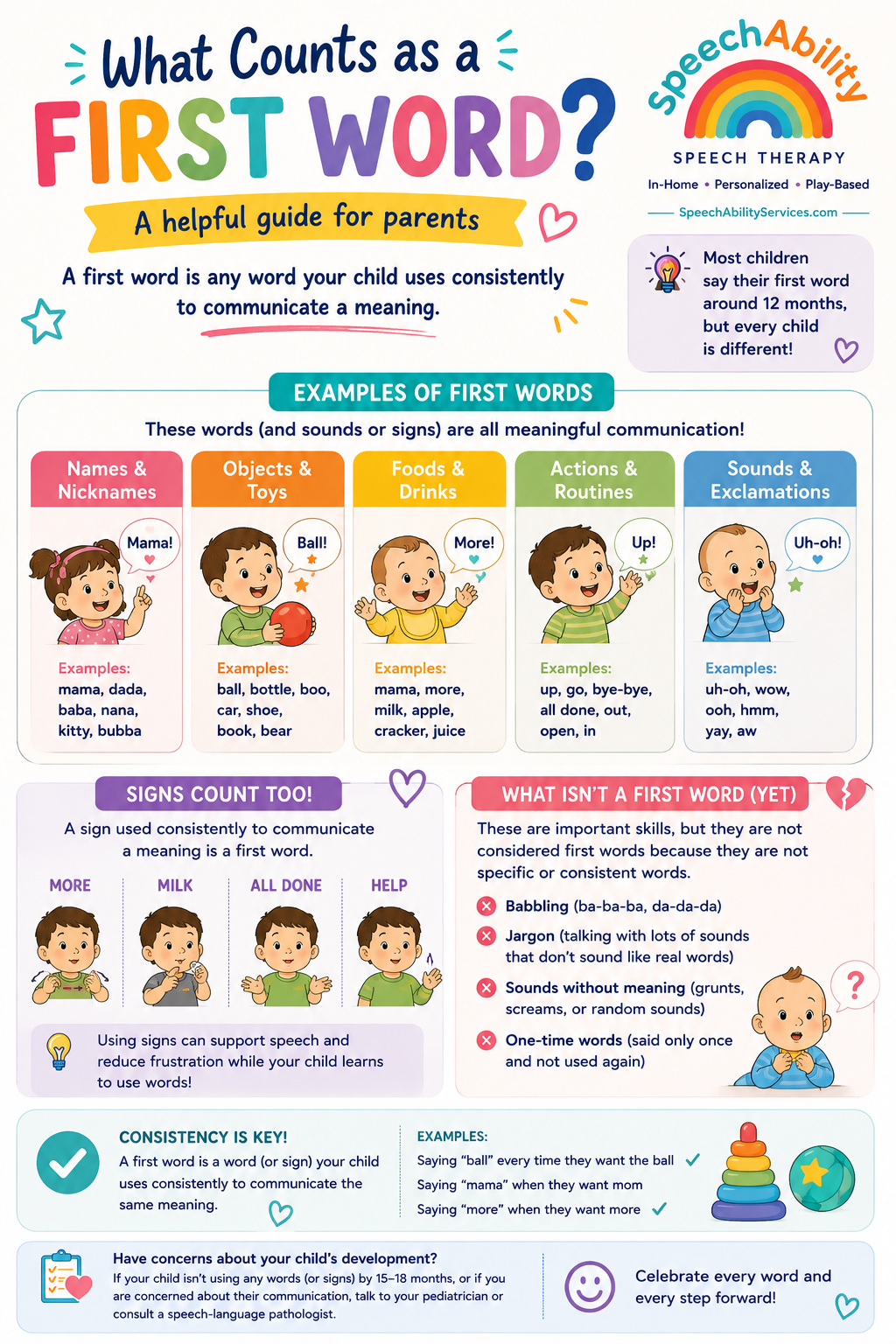
Not every sound or imitation is considered a true first word. Learn what qualifies as a meaningful first word and what to expect as your child's vocabulary begins to grow.
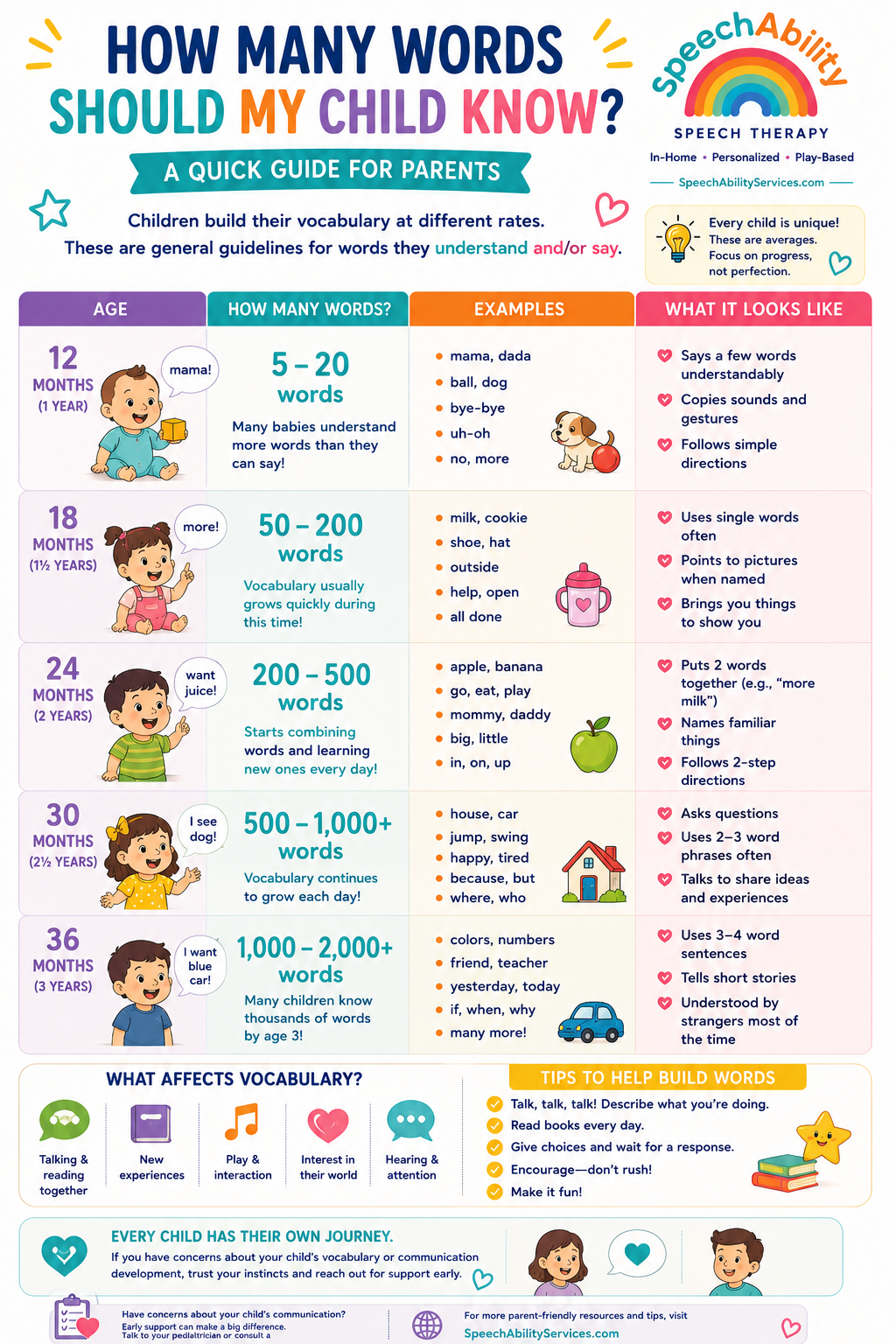
Children develop vocabulary at different rates, but there are general milestones to guide expectations. This reference provides an overview of typical vocabulary growth during the early years.
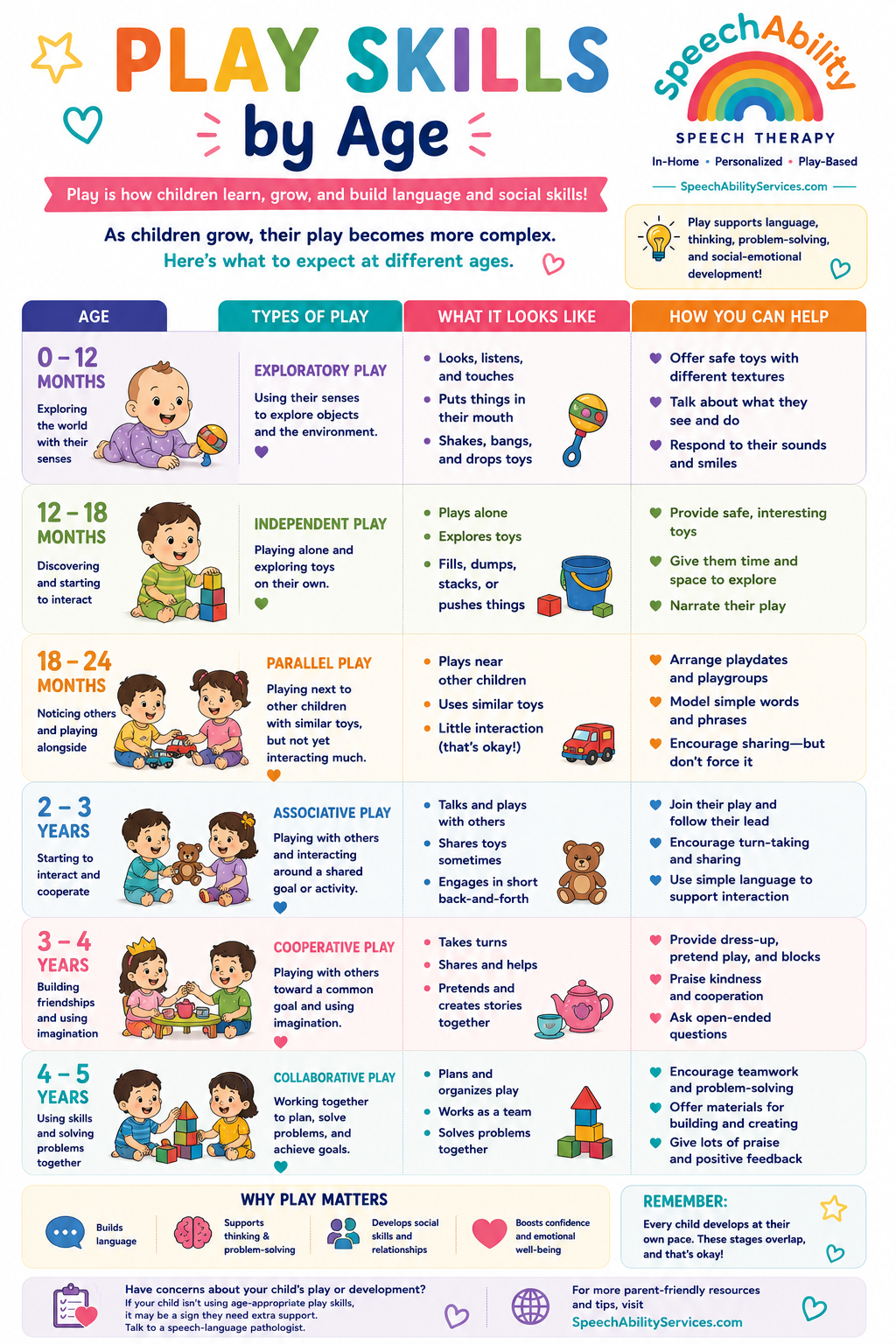
Play is one of the most important ways children learn language. Discover how play skills develop over time and simple ways to encourage communication through everyday play.
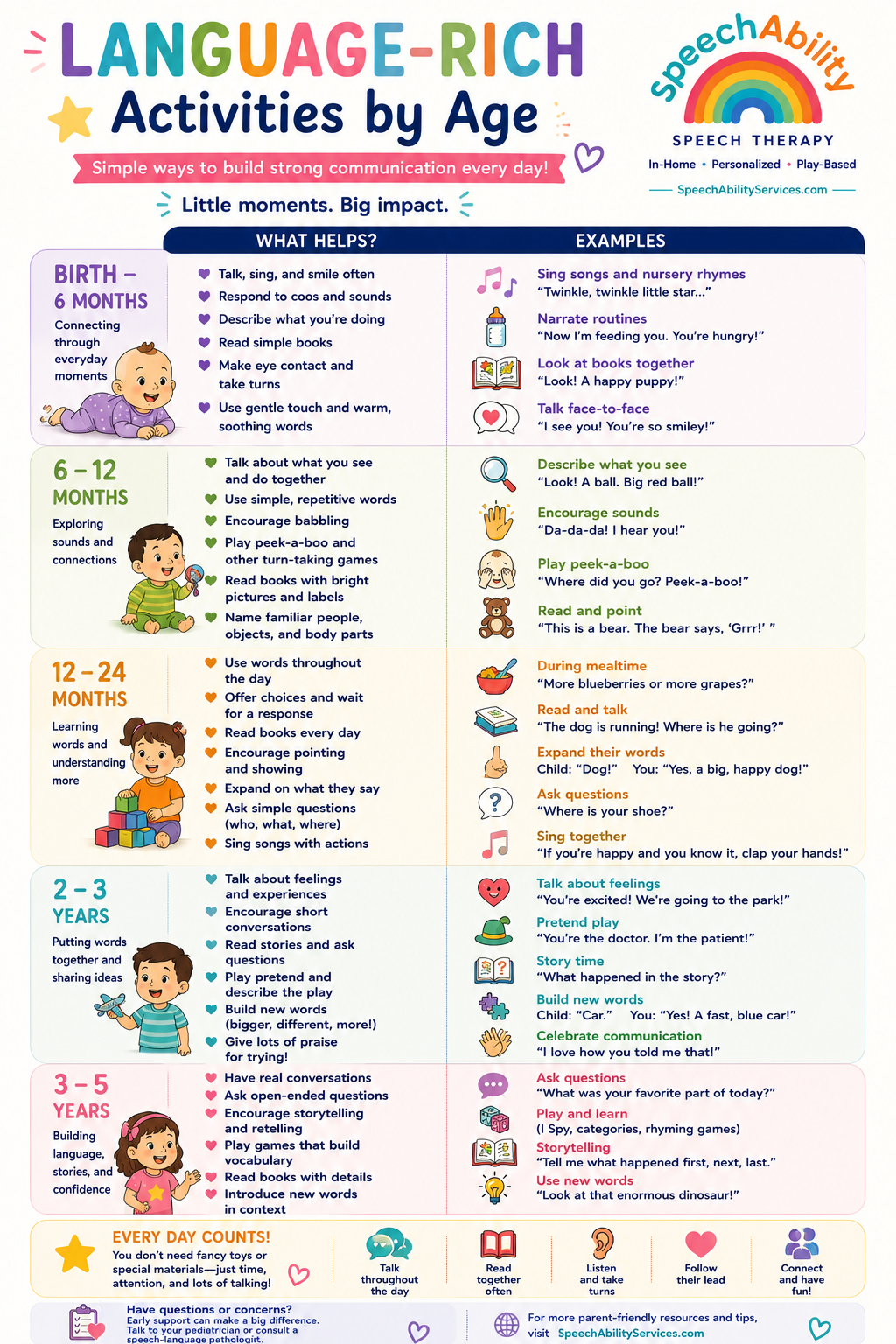
Looking for simple ways to encourage language at home? Explore fun, age-appropriate activities that naturally build vocabulary, conversation, comprehension, and communication throughout the day.
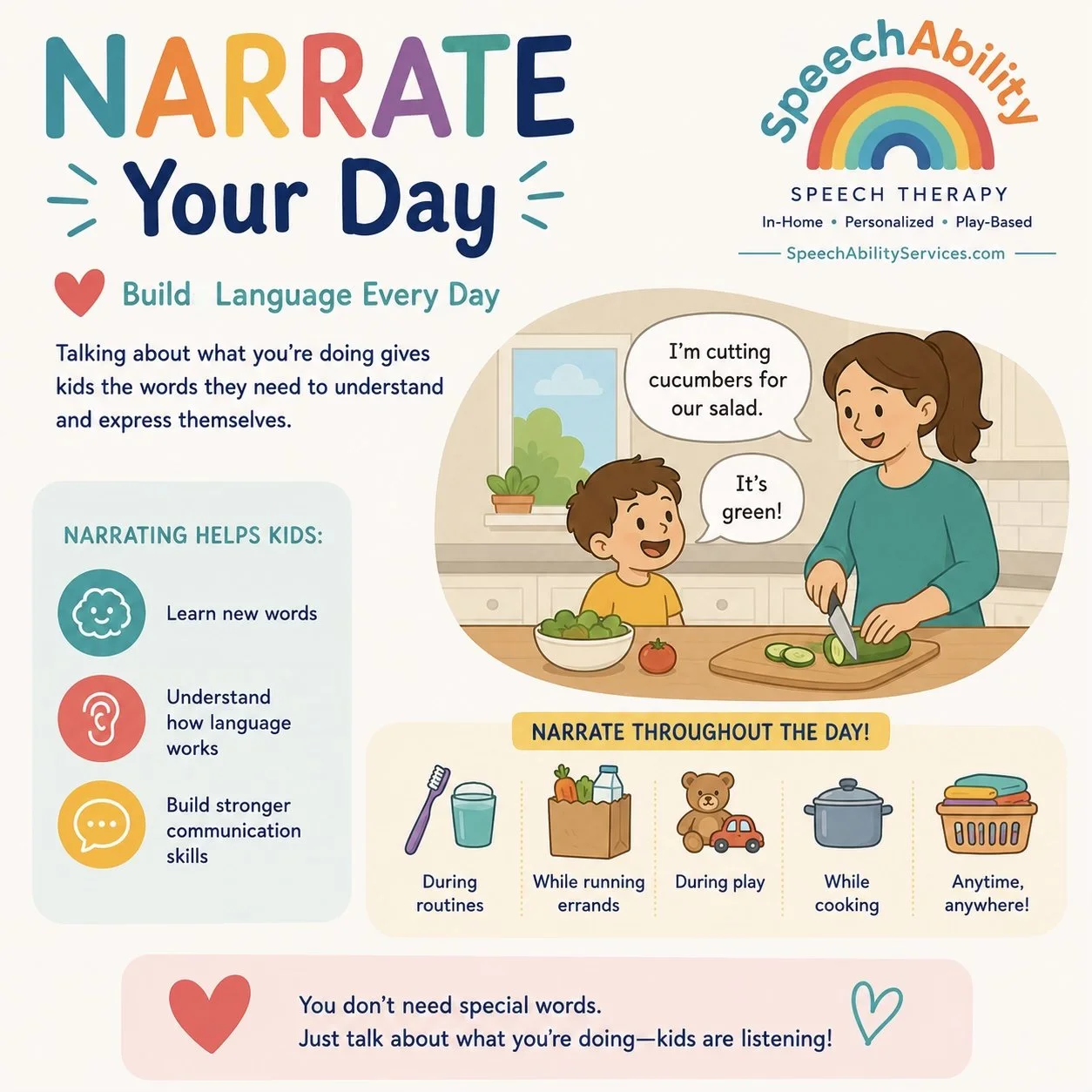
Narrating everyday activities is one of the easiest ways to build your child's vocabulary and language skills. Learn simple ways to turn routines like getting dressed, cooking, and driving into rich language-learning opportunities.
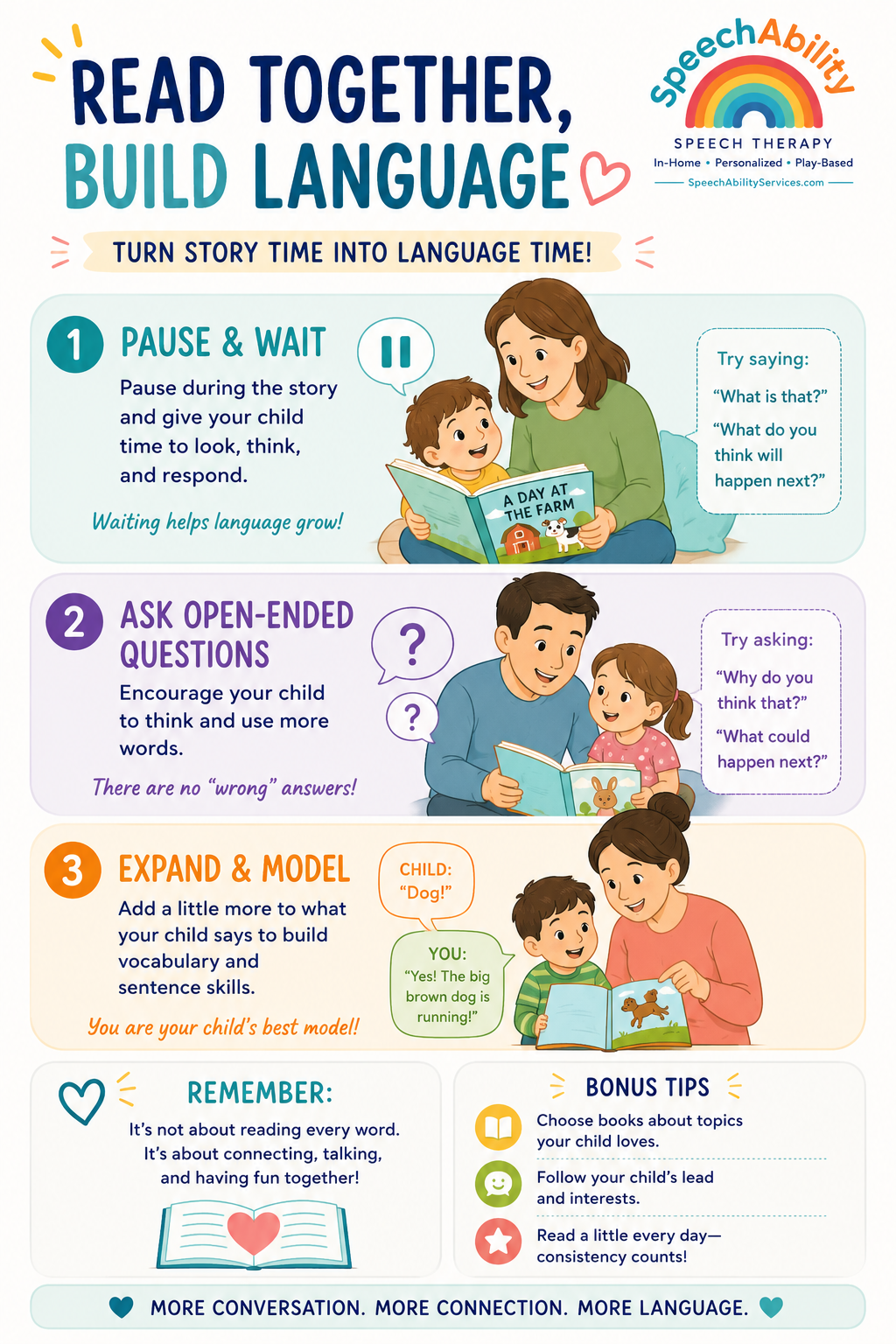
Reading together is one of the most powerful ways to support speech and language development. Discover simple, evidence-based strategies to turn everyday story time into opportunities to build vocabulary, conversation, comprehension, and a lifelong love of books.
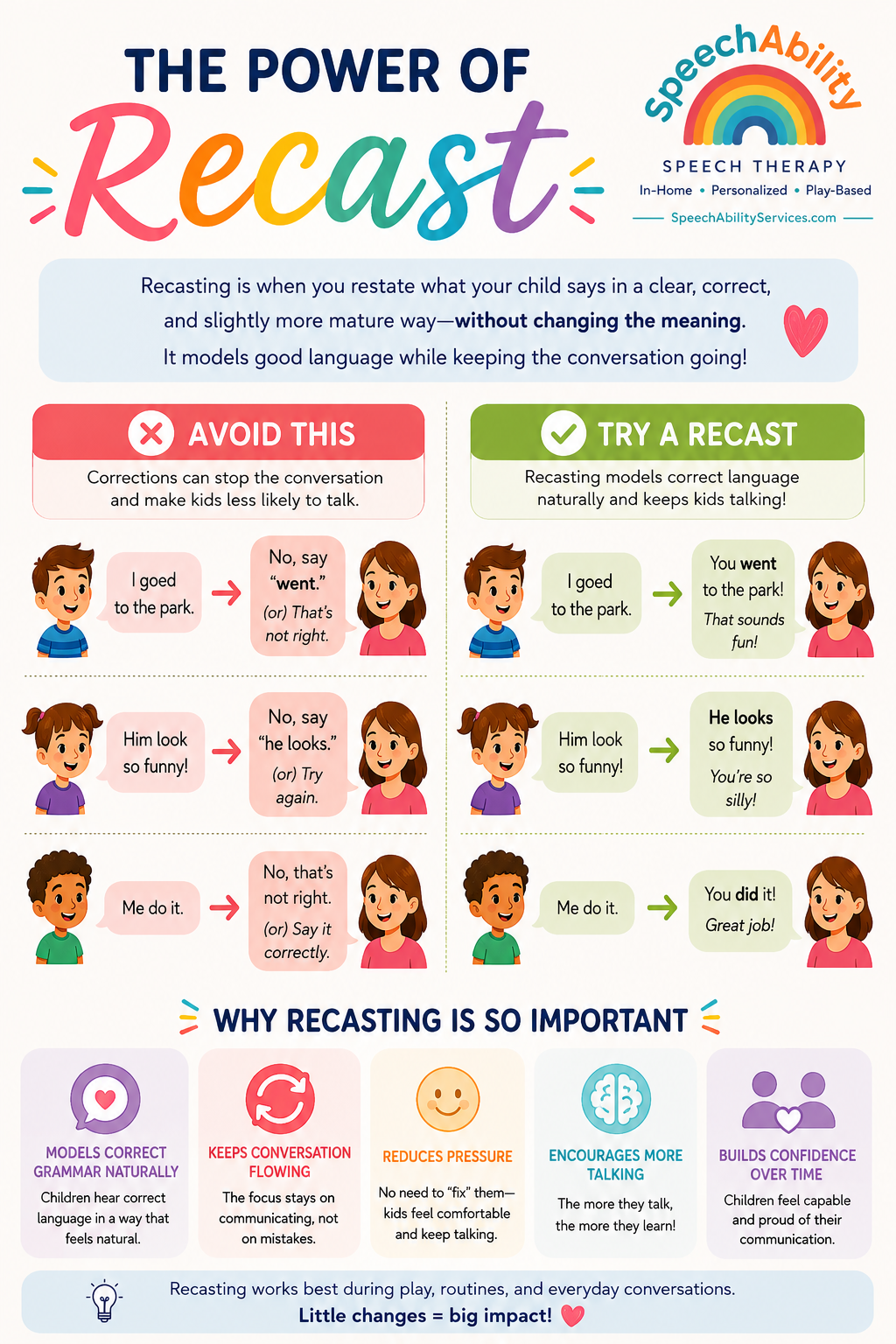
Recasting is one of the simplest and most effective ways to support your child's language development during everyday conversations. Instead of correcting mistakes directly, you naturally model the correct grammar, vocabulary, or sentence structure while keeping the conversation positive and engaging. This evidence-based strategy helps children learn language through meaningful interactions while encouraging confidence and communication.
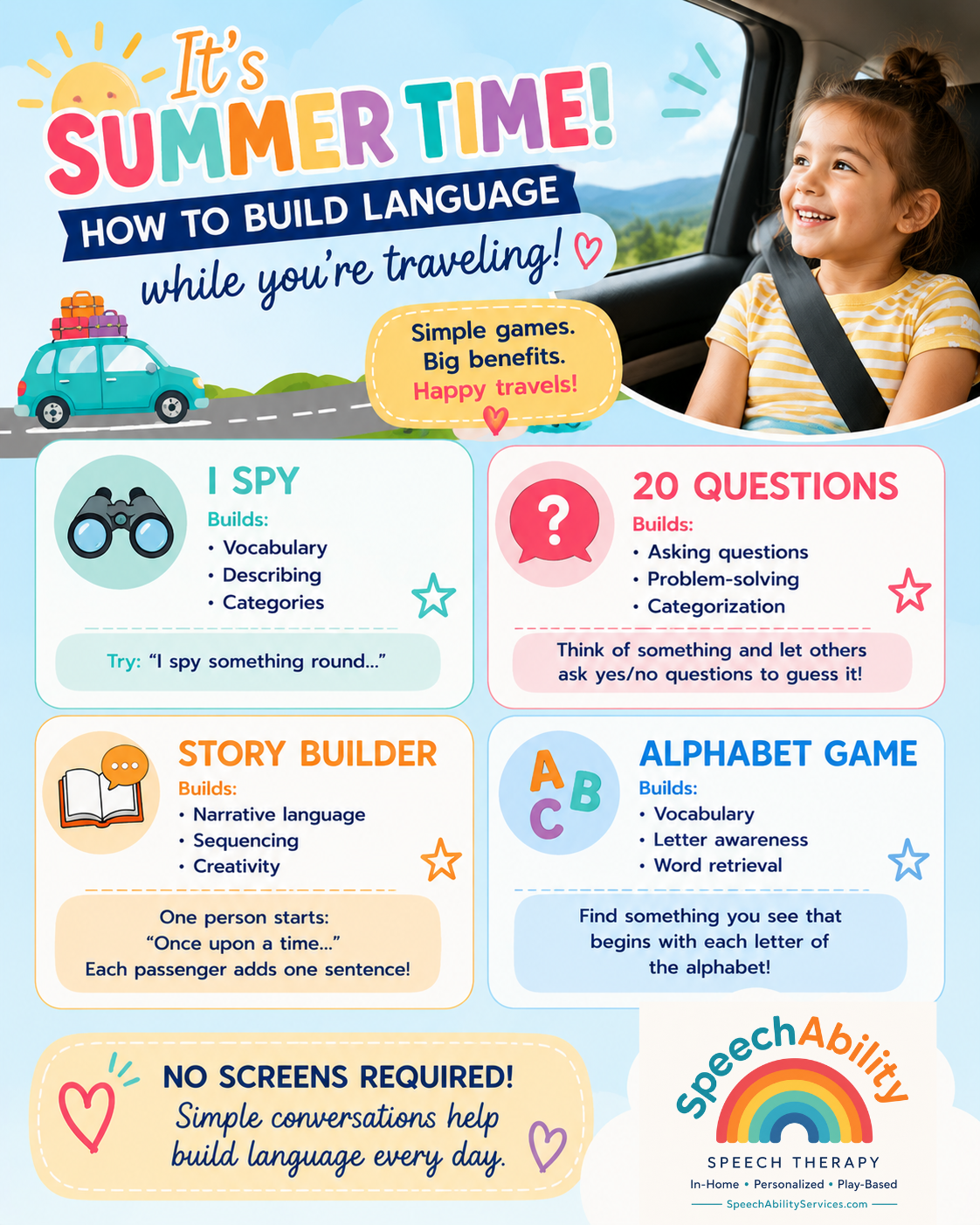
Road trips are a great time to build communication through play and conversation. These simple, screen-free games encourage vocabulary, storytelling, problem-solving, and family connection along the way.
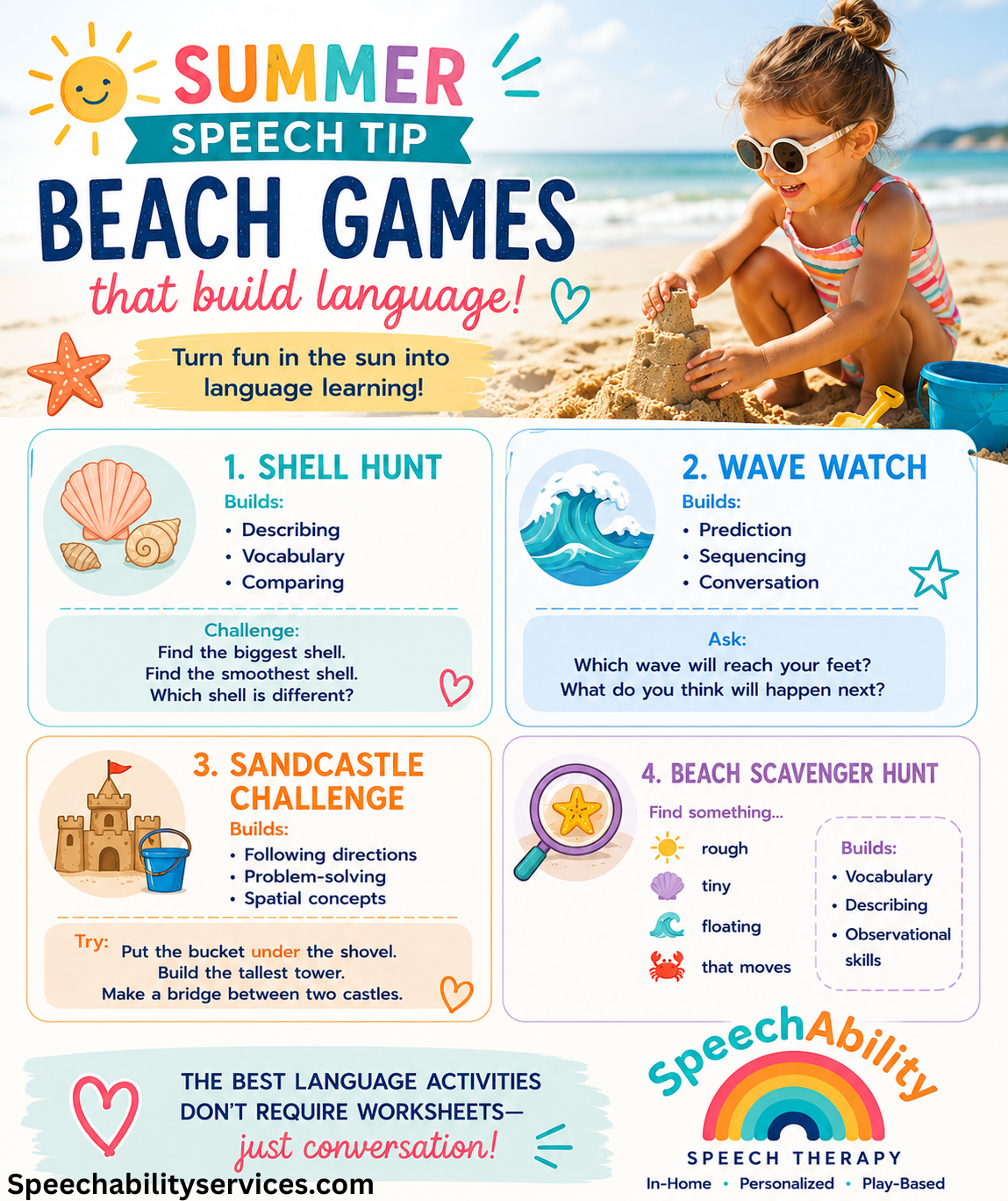
A day at the beach is full of opportunities to build speech and language! These fun, play-based activities encourage vocabulary, describing, problem-solving, and conversation, all while making lasting summer memories together.