
Speech Sound & Articulation Information
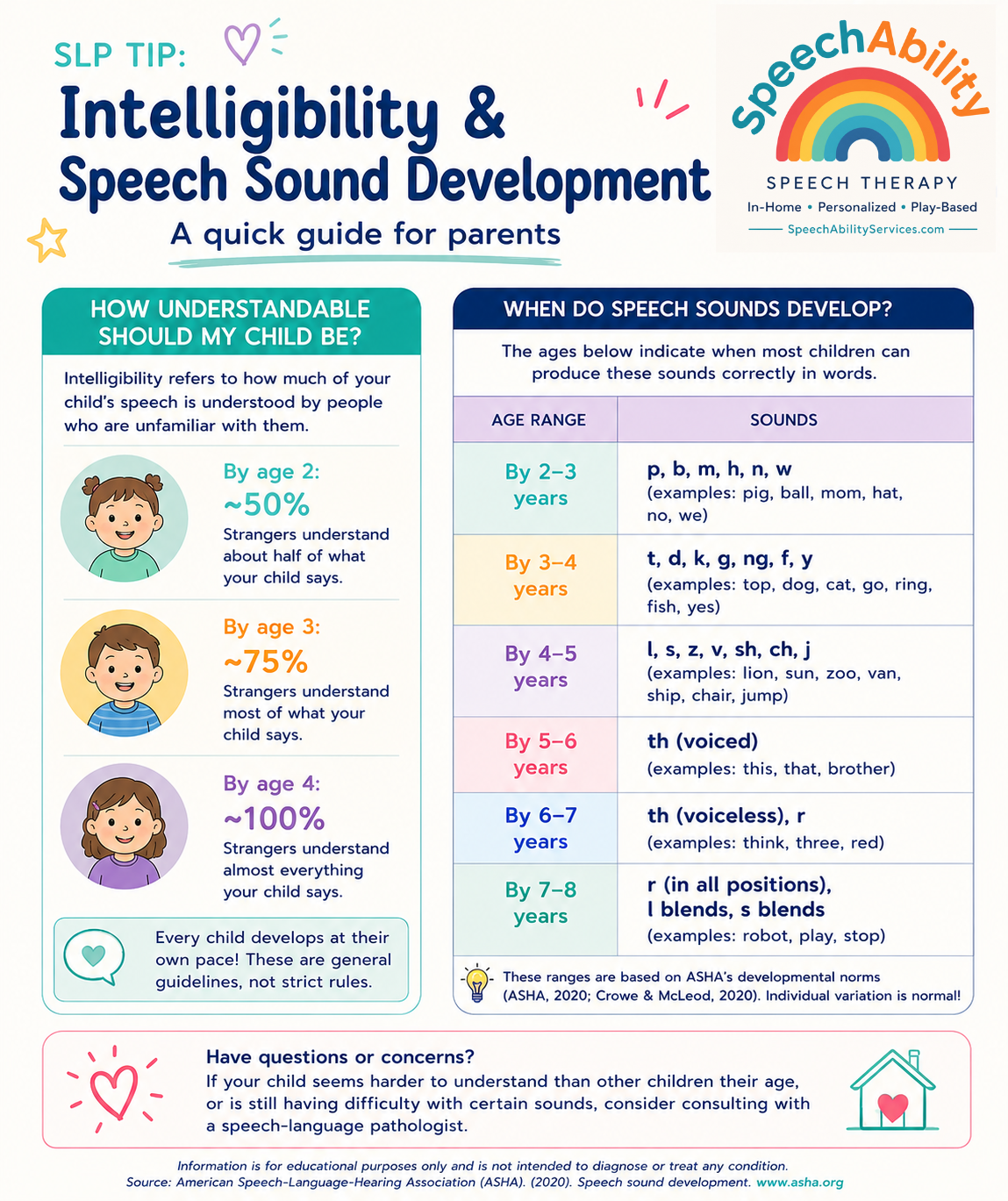
Speech sounds develop gradually throughout childhood, and every child follows their own unique path. This chart highlights the typical ages at which speech sounds are generally acquired and mastered. While these milestones serve as a helpful guide, some variation is expected. If you have questions about your child's speech development, a speech-language pathologist can help determine what is developmentally appropriate.
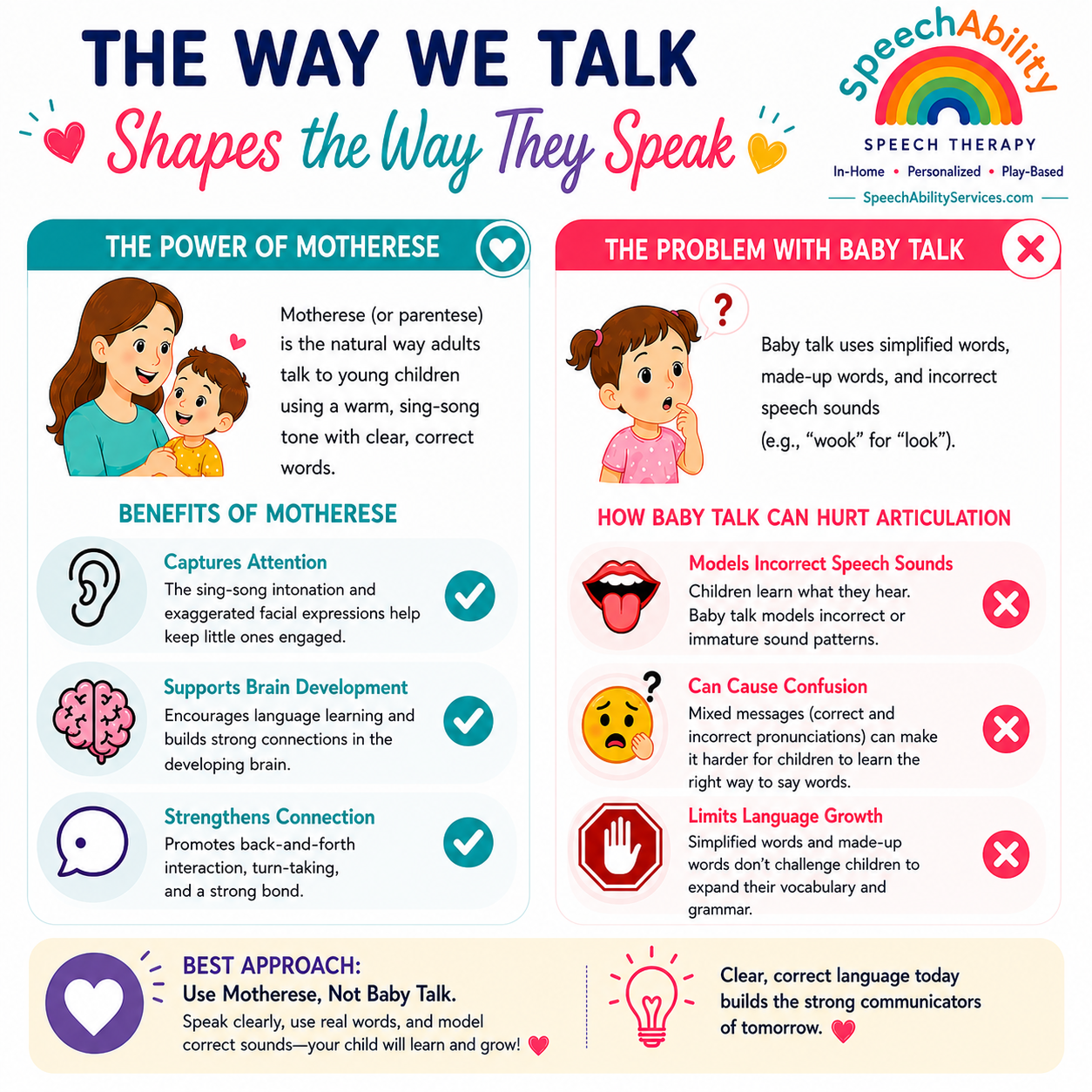
The way we speak to young children plays an important role in speech and language development. Using "motherese" (also called infant-directed speech), a warm, expressive voice with clear, correct words, helps capture attention, build vocabulary, and support early communication skills. While playful voices are wonderful, consistently modeling real words and accurate speech sounds provides children with the best foundation for language and articulation development.
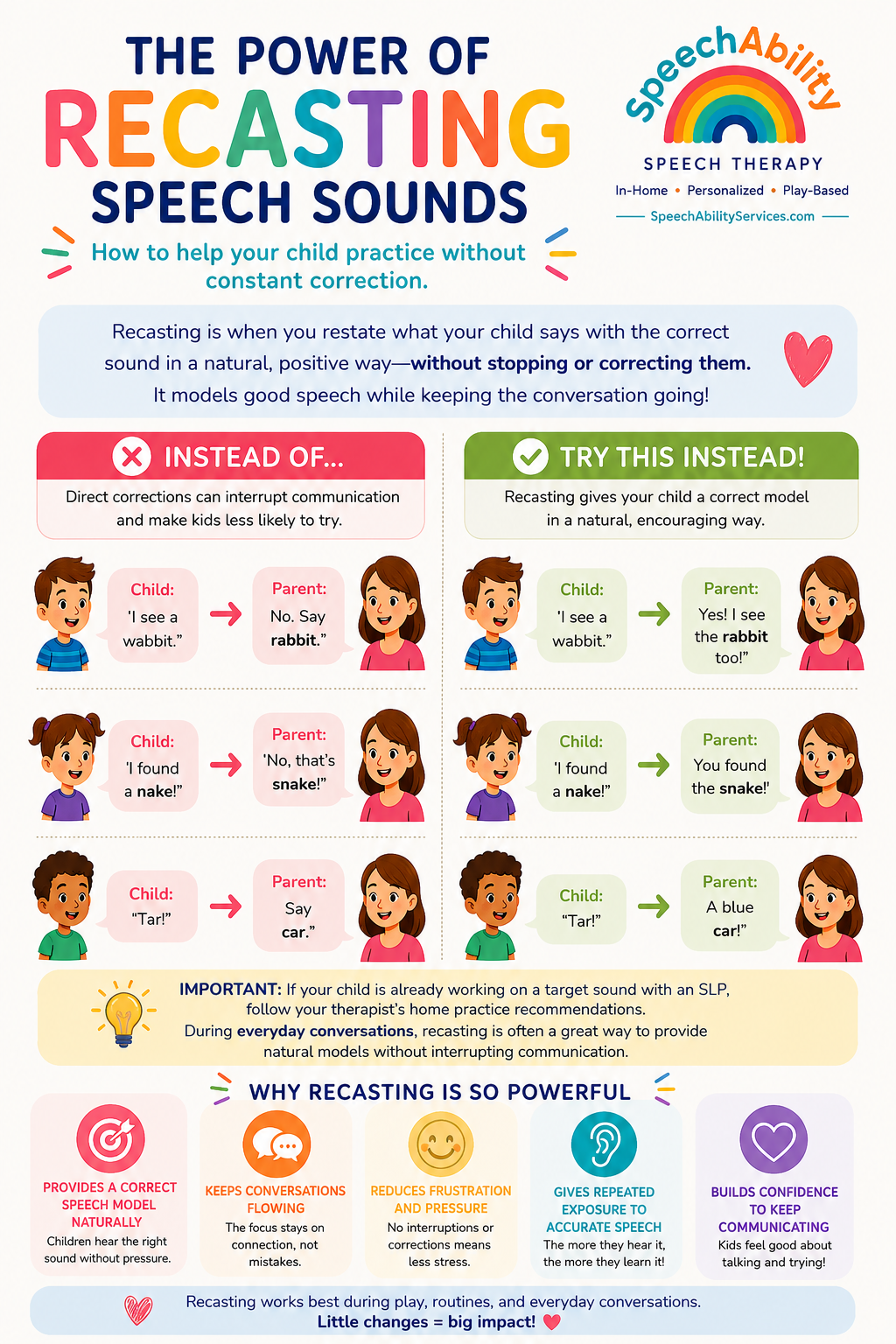
Learn a simple, evidence-based strategy to help your child hear correct speech sounds naturally, without interrupting conversation or creating pressure.
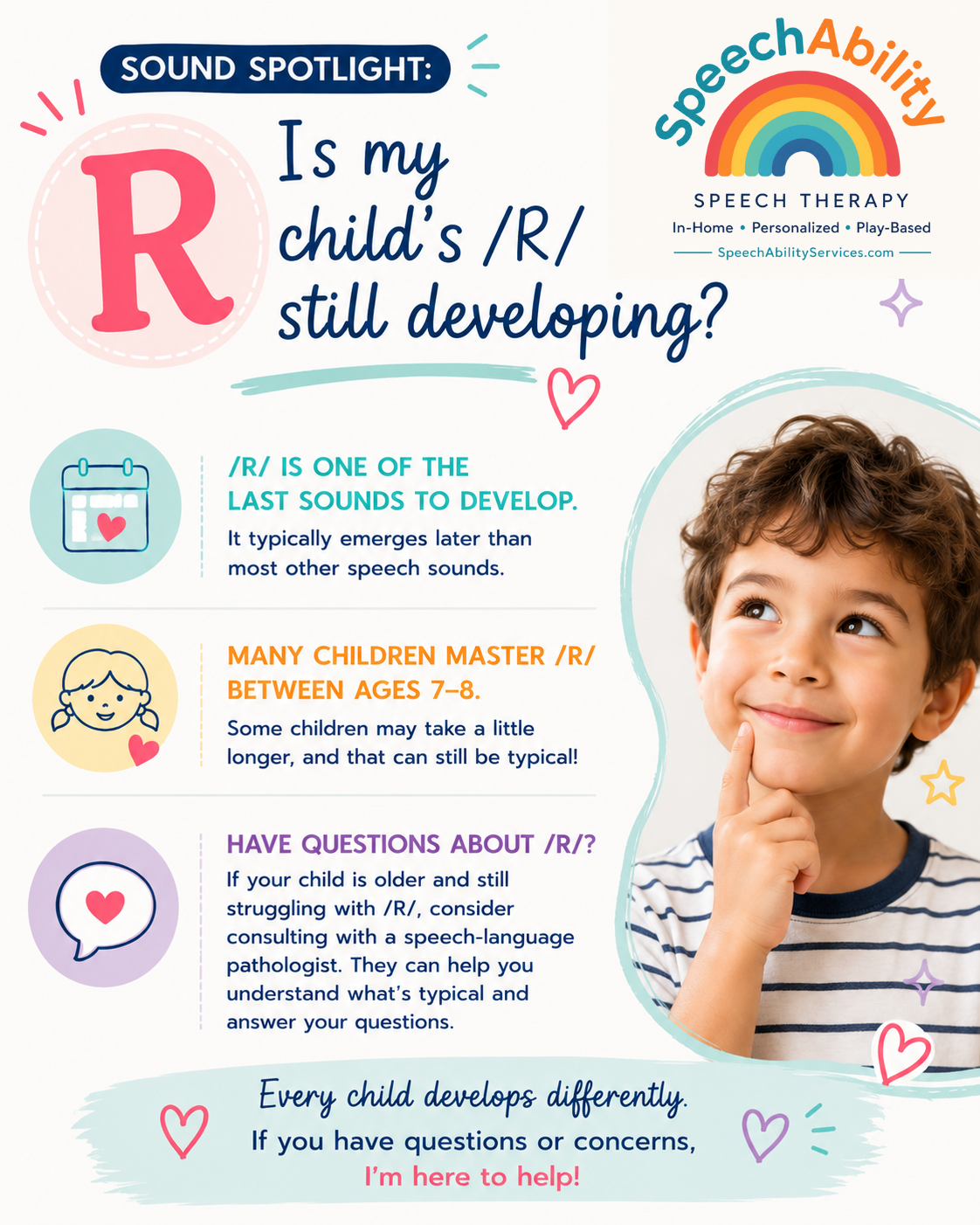
The /R/ sound is one of the last speech sounds to develop and is often mastered later than many other sounds. While many children continue refining /R/ into the early elementary years, persistent difficulty beyond the expected developmental age may be worth discussing with a speech-language pathologist. Every child develops at their own pace, and individualized guidance can help determine the best next steps.
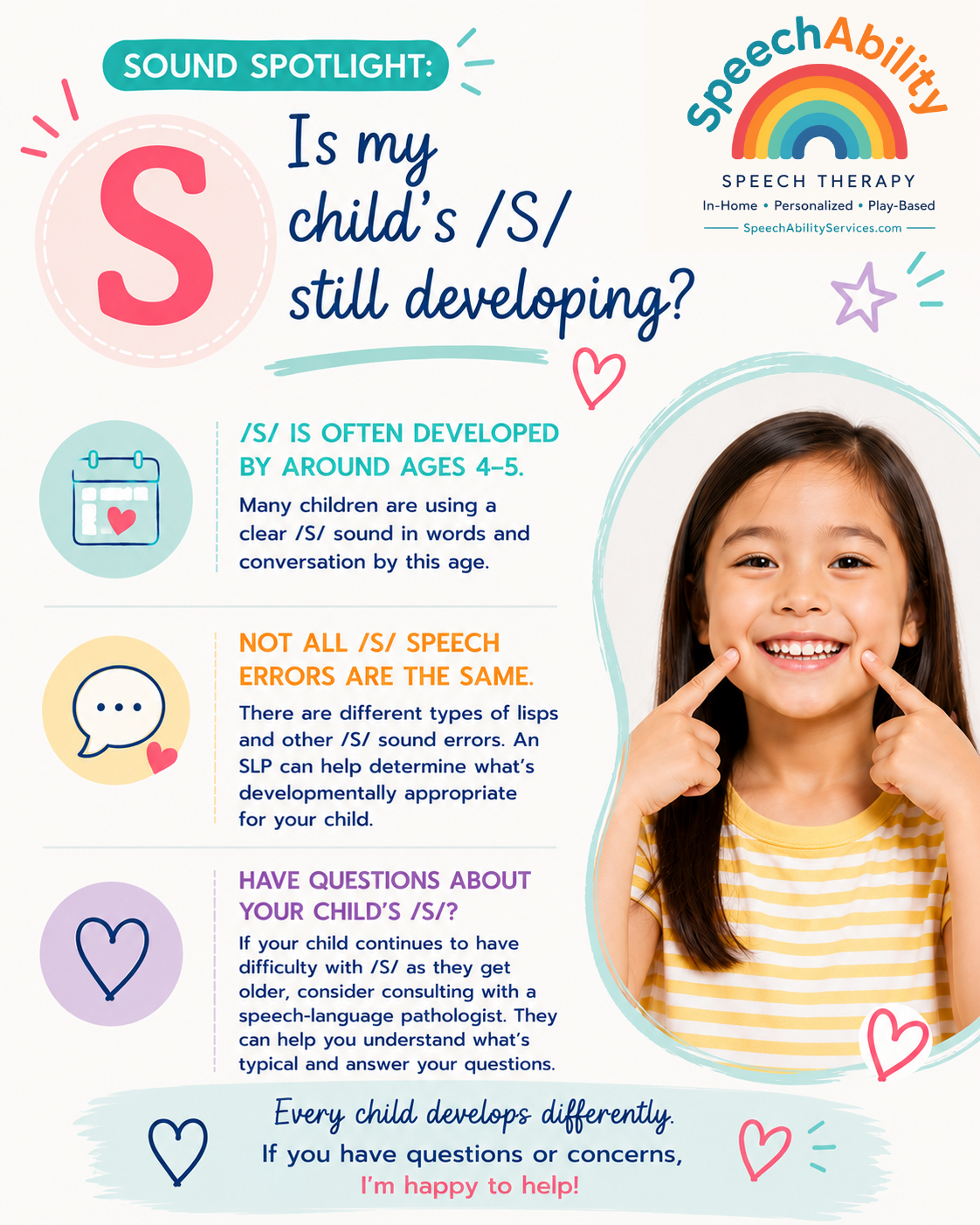
The /S/ sound is an important speech sound for clear communication and develops gradually during early childhood. Not all /S/ speech errors are the same, and different patterns may require different approaches. If your child continues to have difficulty with /S/ as they get older, a speech-language pathologist can help determine what is typical for their age and answer any questions you may have.
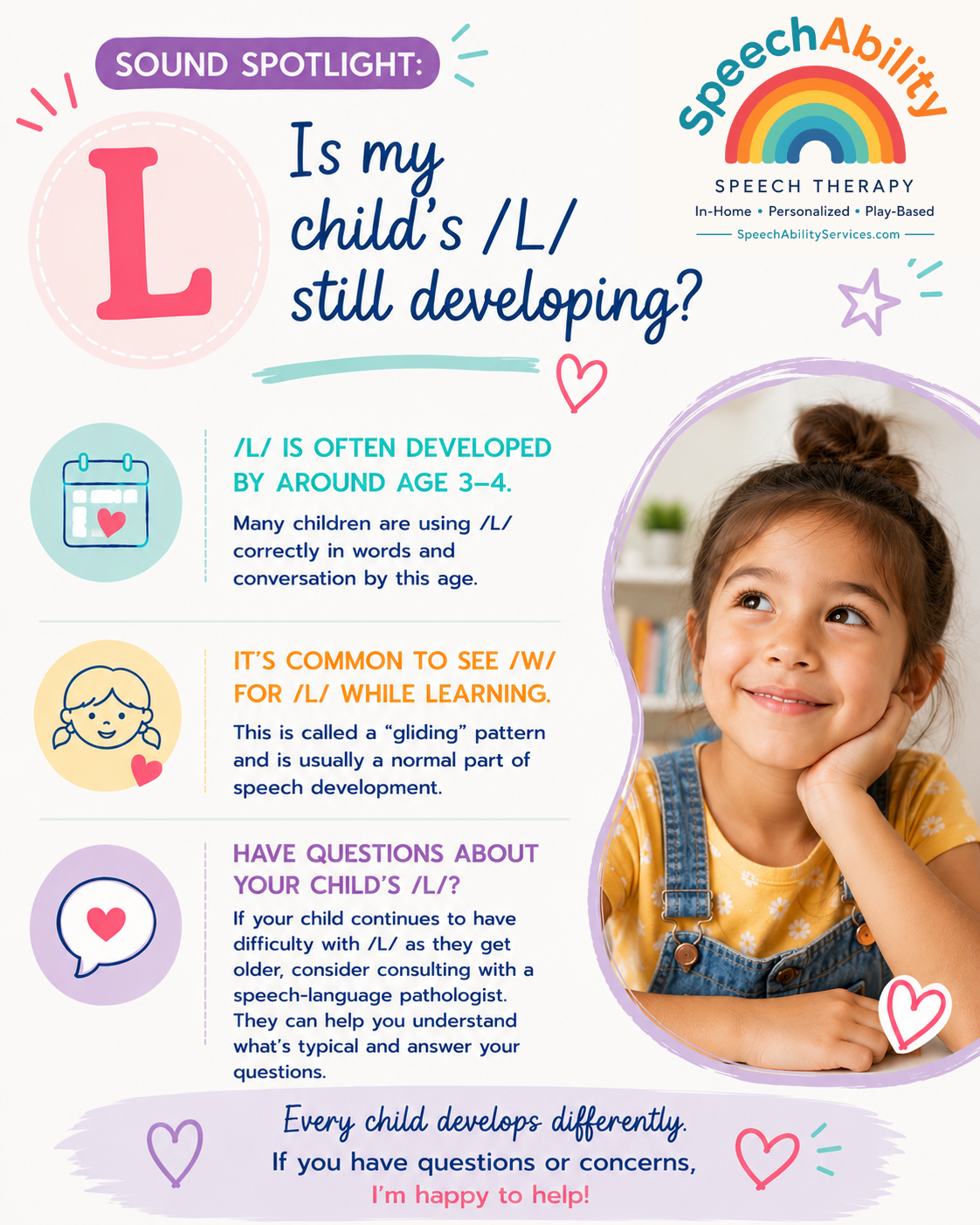
The /L/ sound often develops before later sounds like /R/, and many children are using it correctly by early elementary school. Some children temporarily substitute a /W/ sound while learning /L/, and this may be part of typical development depending on age. If you have concerns about your child's speech, a speech-language pathologist can help determine whether additional support may be beneficial.
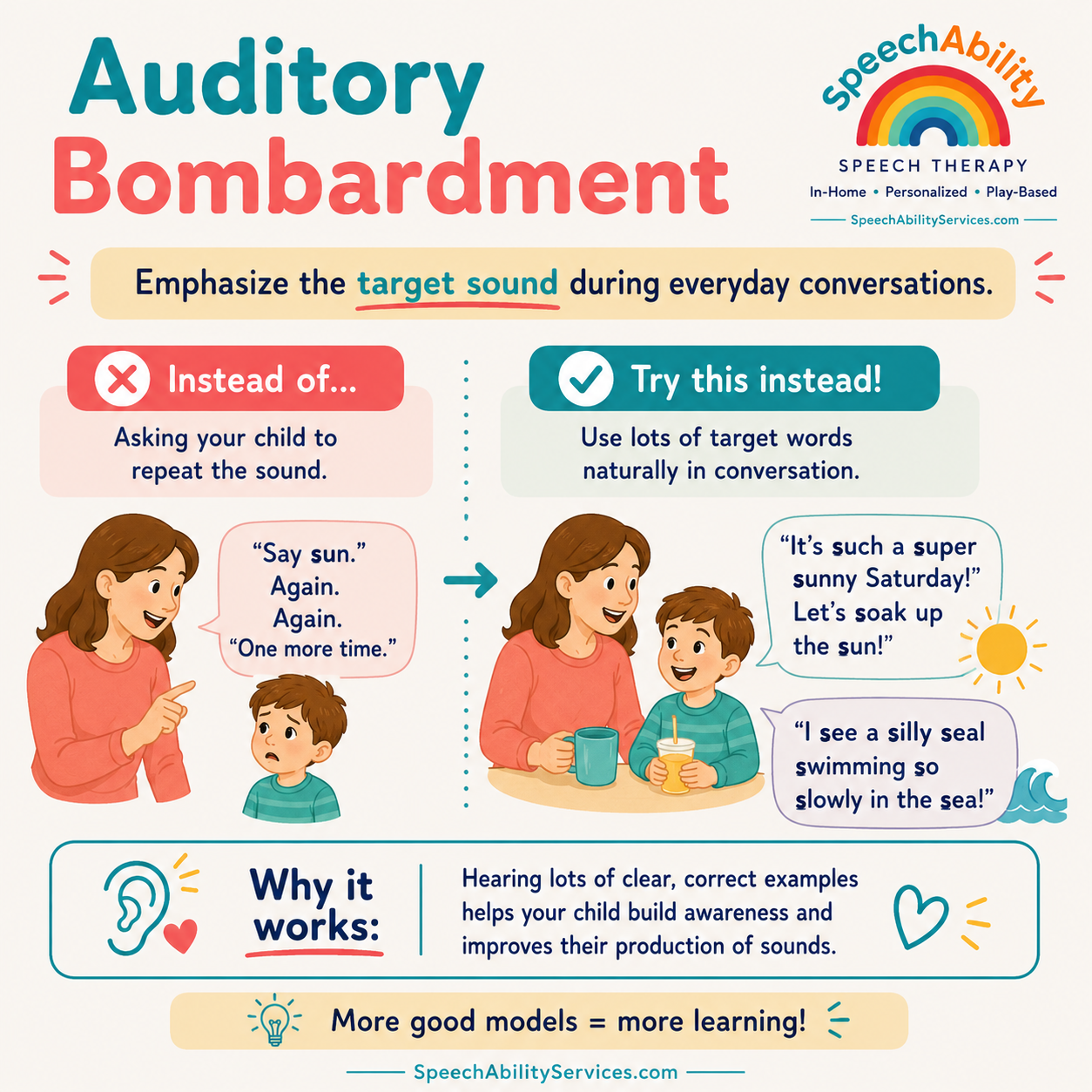
Auditory bombardment is a simple speech therapy technique that helps children learn new sounds by hearing them used correctly many times in a fun, natural way. Discover how you can easily incorporate this strategy into everyday routines at home.
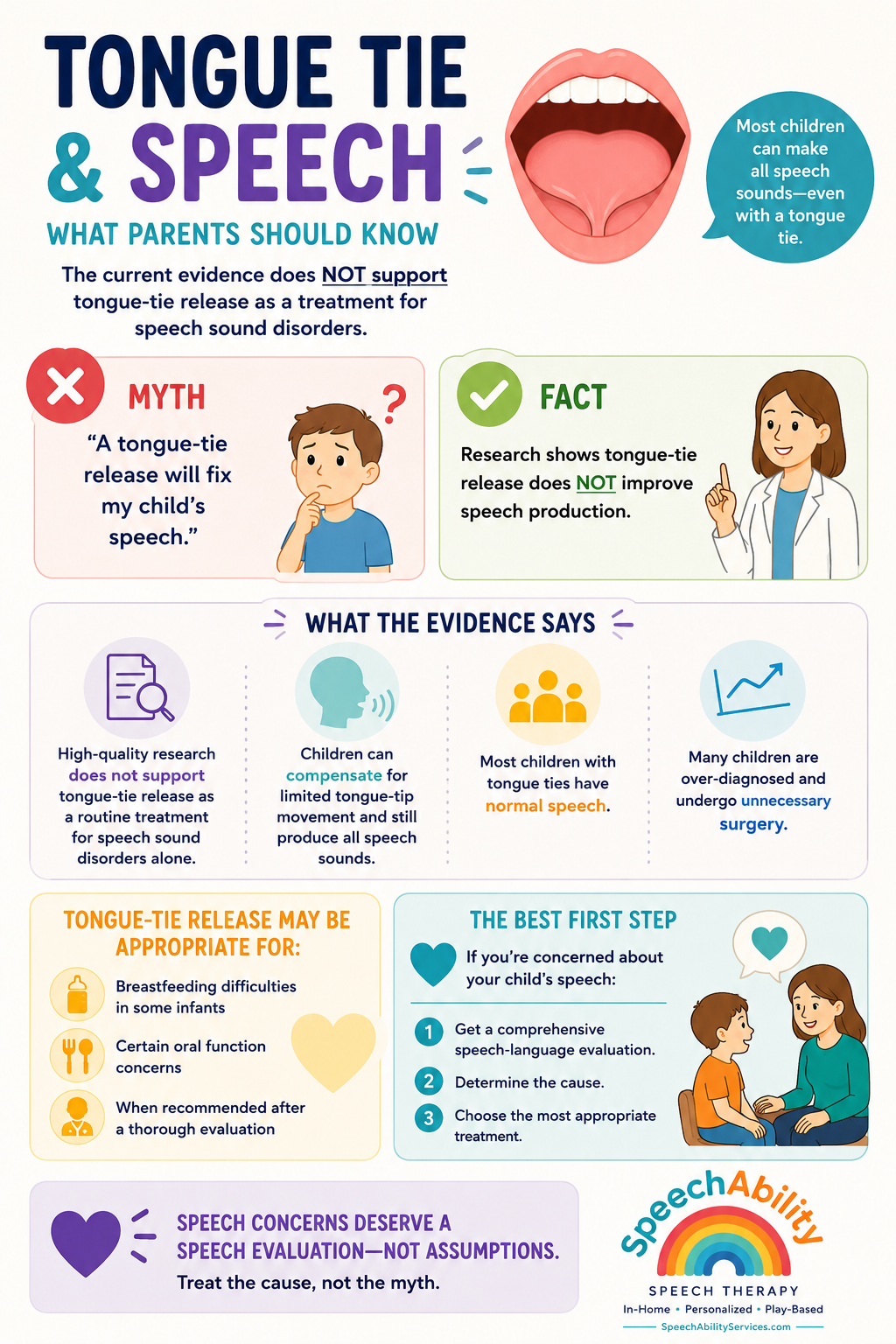
Many parents are told that a tongue-tie release will improve speech, but what does the research actually say? This evidence-based resource explains what tongue-tie is, when treatment may be appropriate, and why surgery is not typically recommended solely to improve speech development.
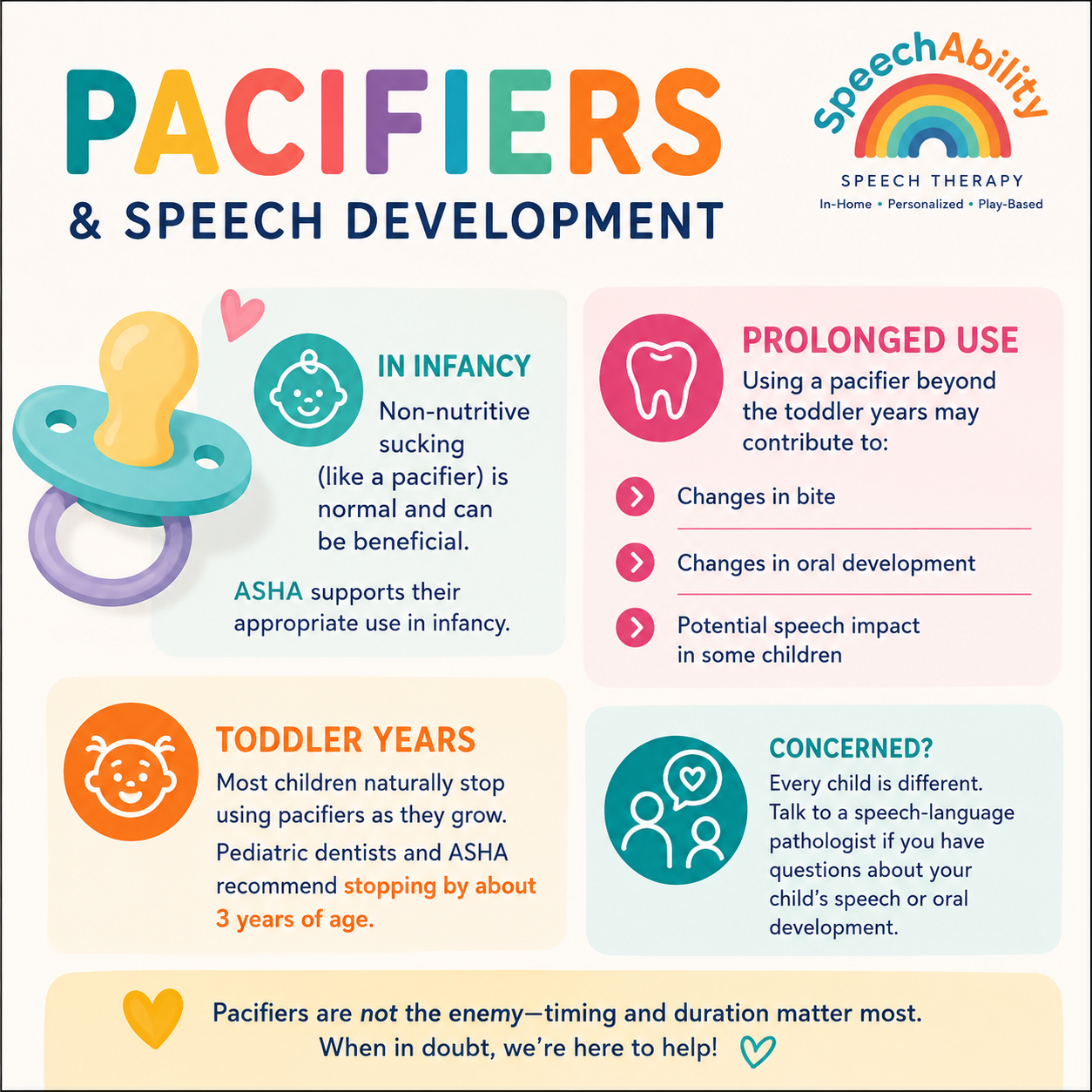
Wondering if a pacifier will delay your child's speech? This resource separates common myths from current recommendations and explains when pacifier use is developmentally appropriate—and when it may be time to start weaning.
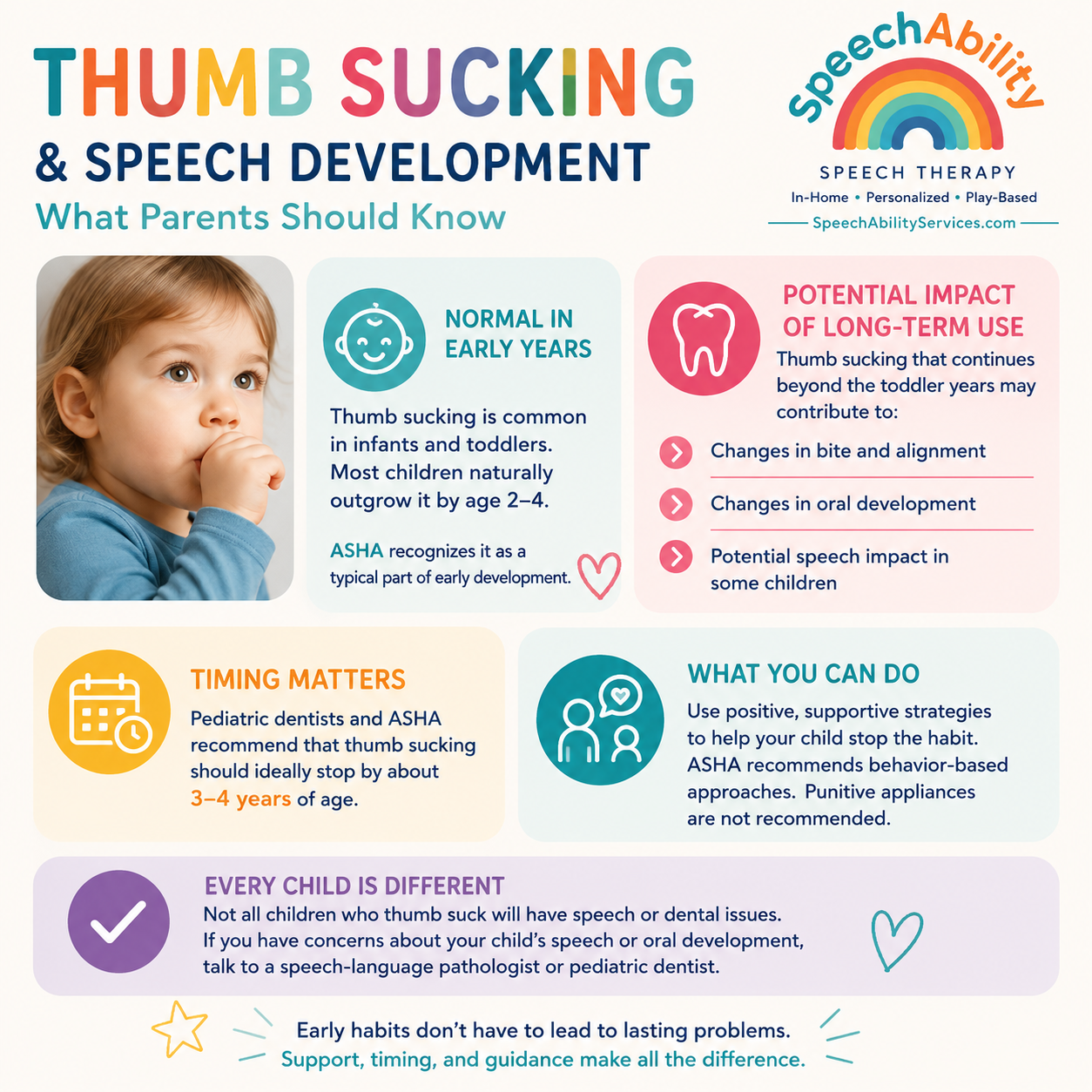
Thumb sucking doesn't automatically cause speech problems, but prolonged habits can sometimes affect oral development. Learn when it's considered typical and when it may be worth discussing with your child's speech-language pathologist or dentist.
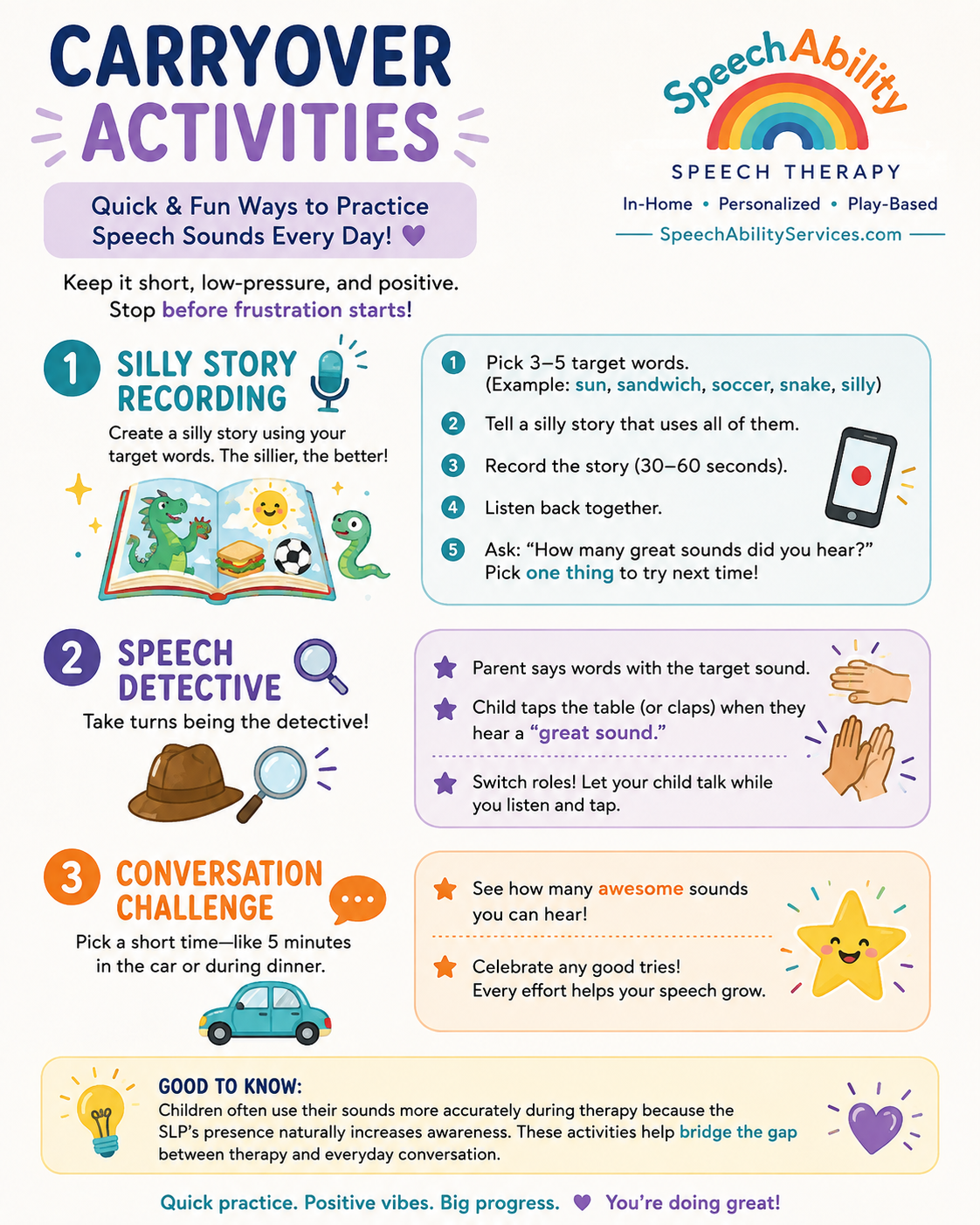
As children become more accurate with their speech sounds in therapy, the next challenge is using them consistently at home, at school, and in everyday conversations. These quick, fun activities are designed to build awareness and confidence, without creating frustration. 💡 Remember: children often use their sounds more accurately during therapy because the SLP's presence naturally increases awareness. The goal of carryover activities is to bridge the gap between therapy and everyday life, one conversation at a time.